Just Flip Gibson Already: Calls for Redevelopment of Brownfields Grow as Agricultural Crises Deepens
An agricultural crisis has spread across the galaxy. The rising price of HER and H2O, and the falling price of KOM, DDT, and CL threaten food and chemical producers with a margin compression trap, where input costs rise while profits...
Rising agricultural input costs and shrinking industrial margins have reignited debate over abandoned core-world land, with economists, businesses, and protesters calling for faster redevelopment of brownfields.
By [OFEC] delissaious | Guest Contributor
An agricultural crisis has spread across the galaxy.
The rising price of HER and H2O, and the falling price of KOM, DDT, and CL threaten food and chemical producers with a margin compression trap, where input costs rise while profits decrease. Initially stoked by an increase in DDT prices in February before moving into a full sprint in May, HER prices soared and continue to be high despite DDT prices returning to pre-May levels.
Increasingly, calls are being heard for changes in galactic law to allow redevelopment of brownfields, land plots left leased out by the APEX system to defunct companies.
The story in data
From late May through June of this year, high KOM and FIM prices led to a rush of companies entering the food industry to capitalize on increased demand. As a result, the industry's production more than doubled. However, from late June to early July, KOM prices declined, likely due to oversupply. FIM, on the other hand, continues to rise in all but Antares space, suggesting there is still room to grow. MED, another product that requires HER, remains relatively stable.
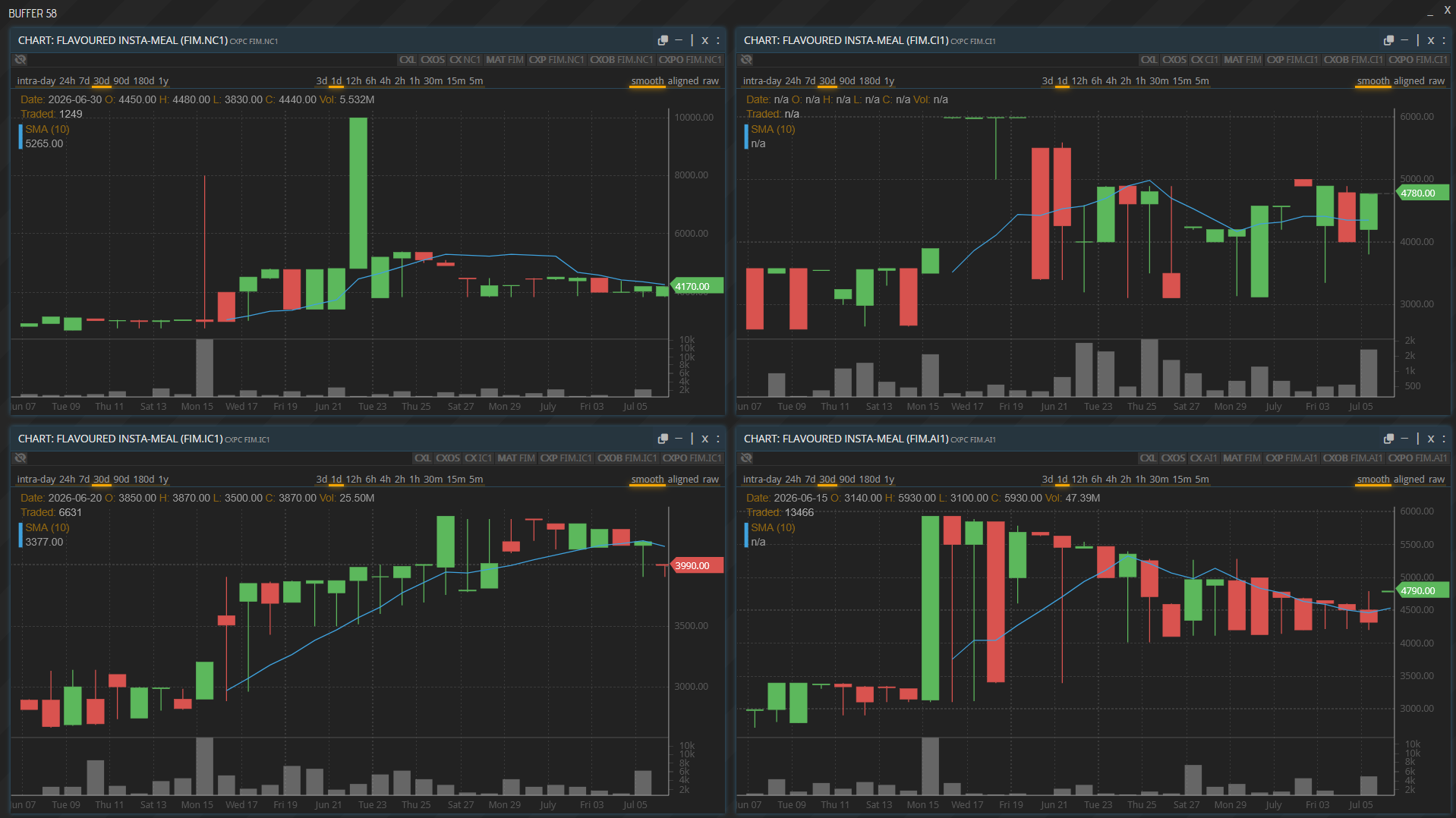
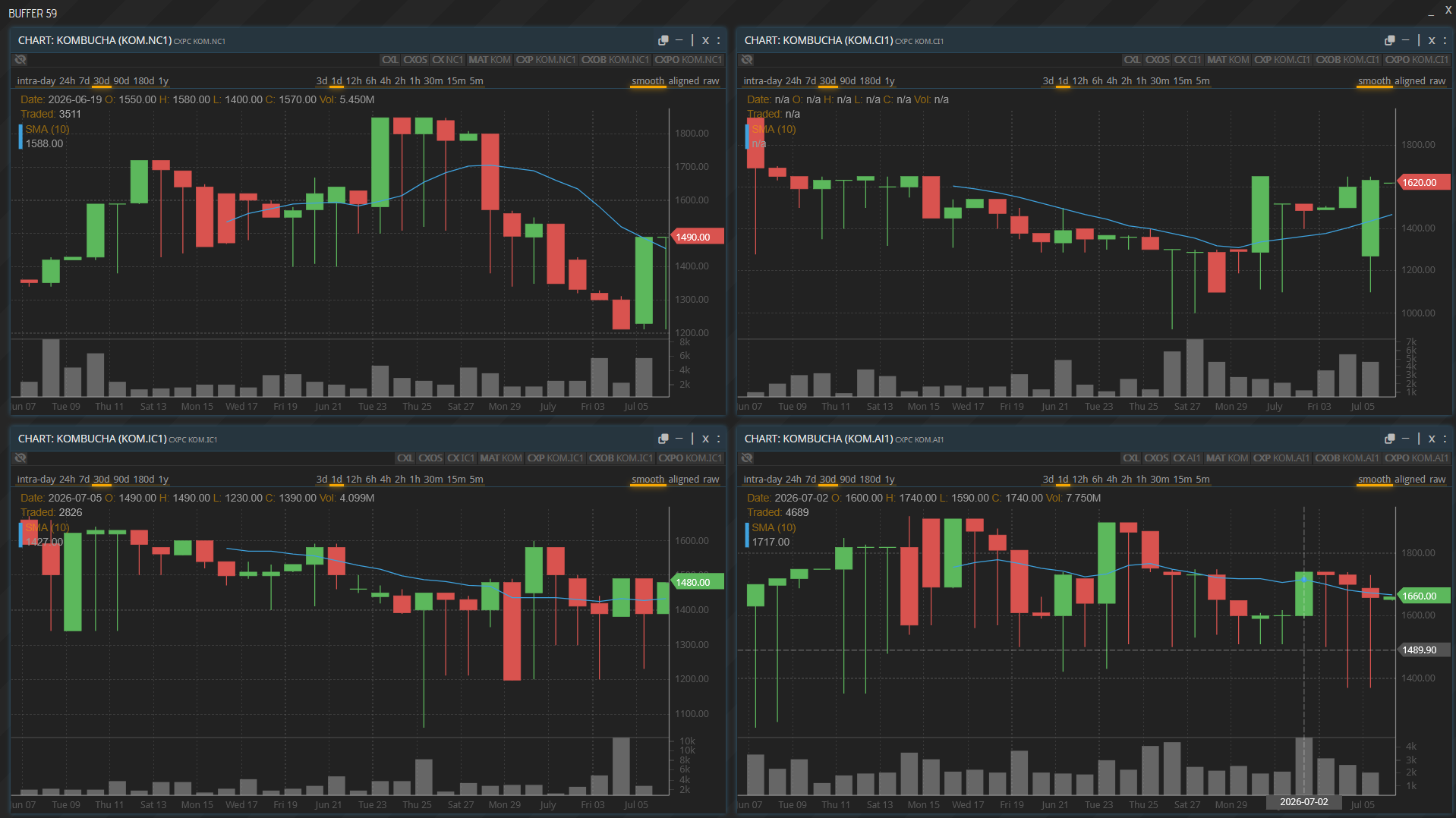
Figure 1. Commodity prices for KOM, FIM, and MED from late May through early July.
Throughout the month of June, HER has seen a dramatic rise in value, with both Benten and Hortus experiencing sudden price spikes. H2O has also seen a marked increase in price.
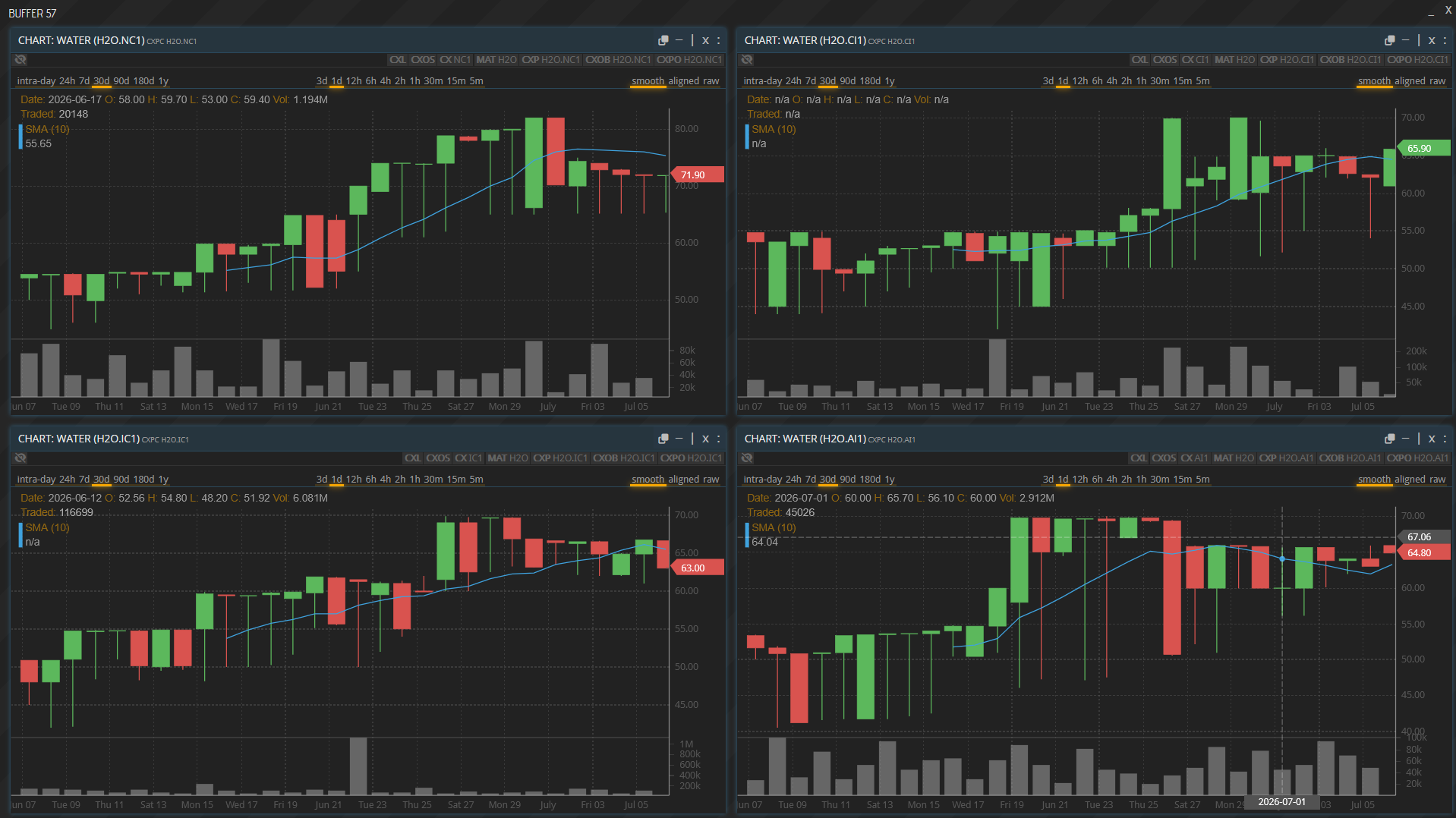
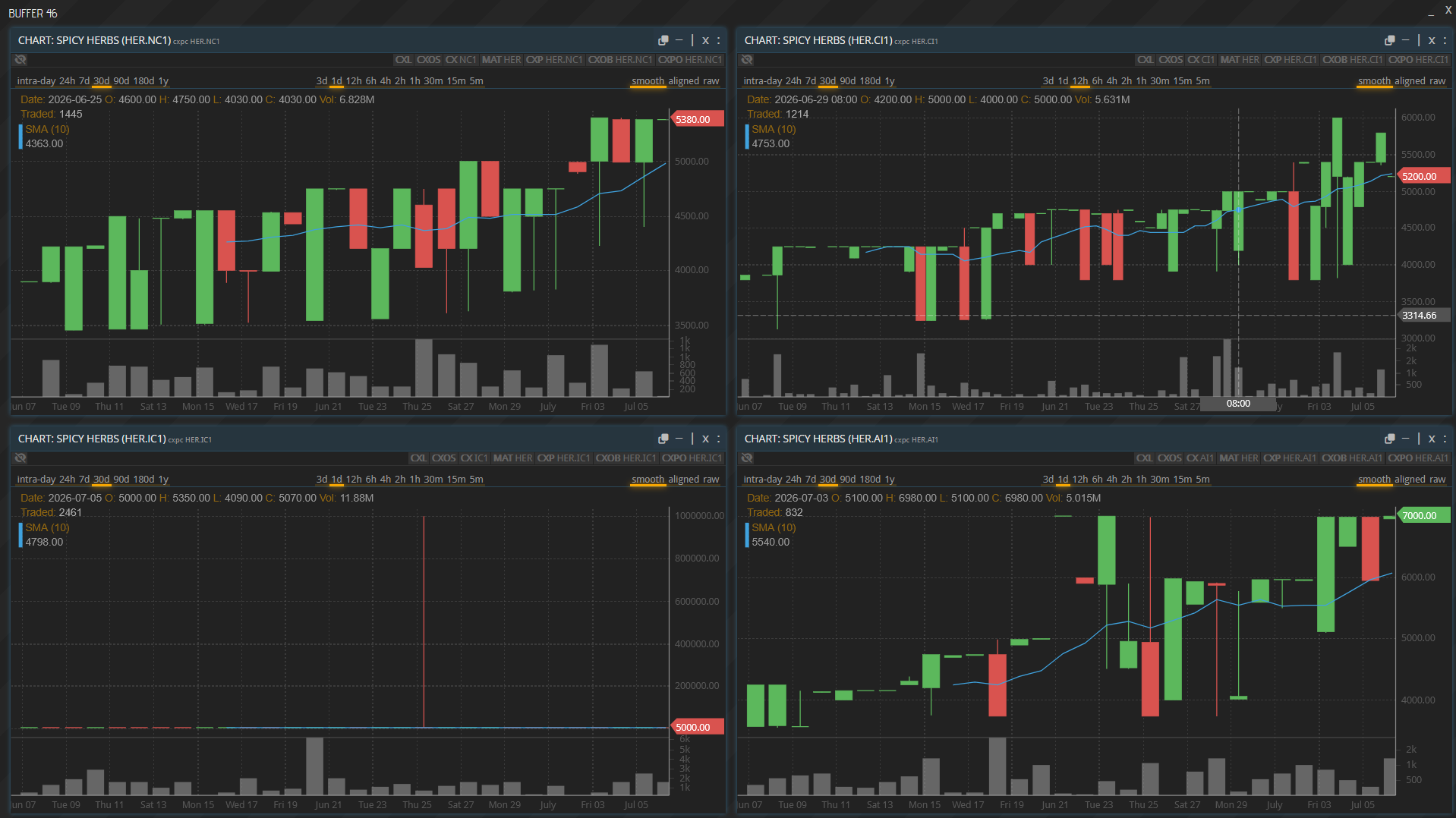
Figure 2. HER and H2O prices during June, showing sustained increases across Benten and Hortus.
Despite the increase in HER prices, the cost of DDT and its input, CL, has gone down.
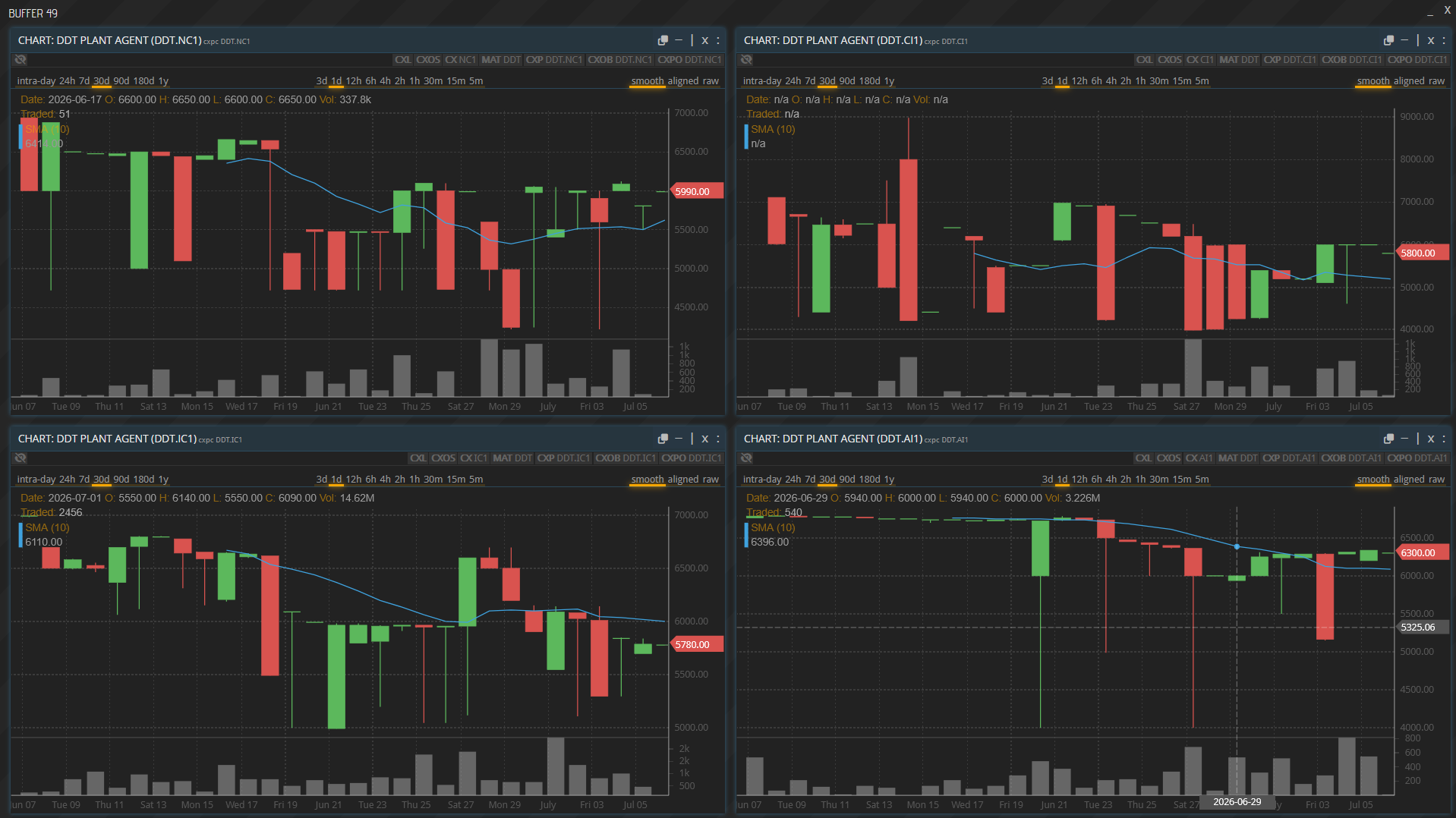
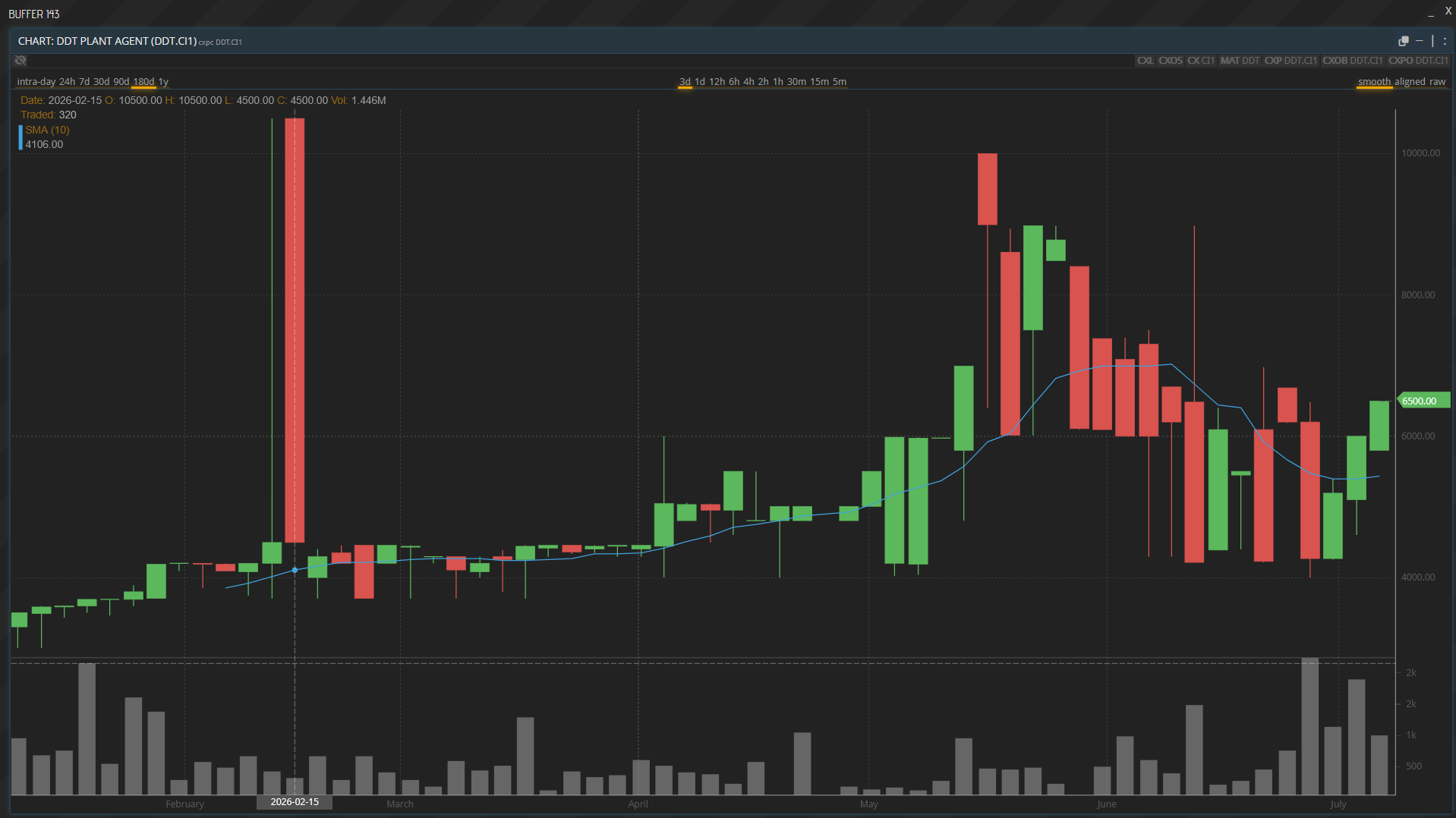
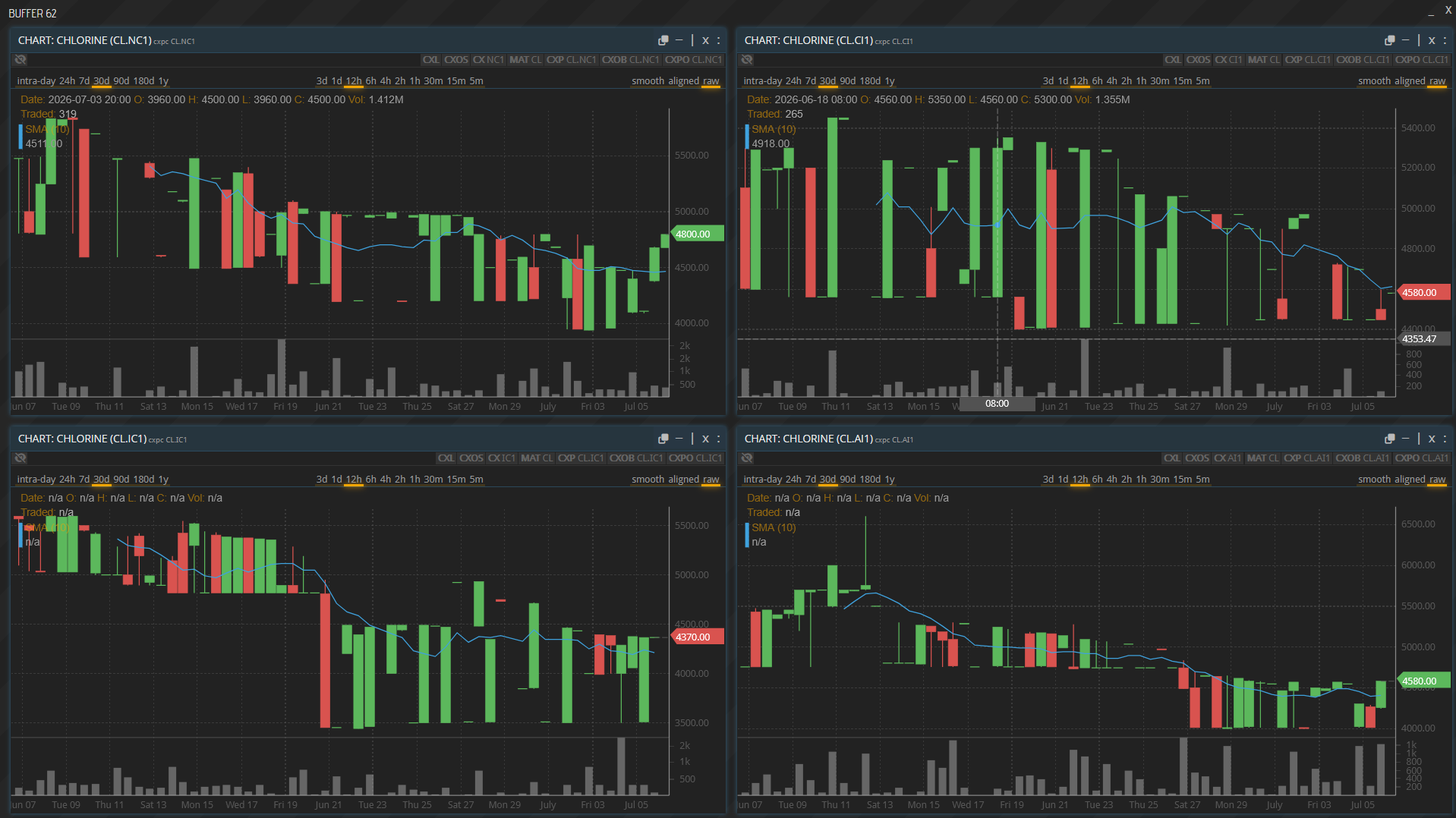
Figure 3. DDT and chlorine (CL) prices following the May market spike.
Although DDT prices have eased in recent weeks, economists argue the earlier spike fundamentally altered agricultural production economics, with its effects continuing to ripple through supply chains long after prices began to stabilize.
Multiple economists have pointed to the steady rise in DDT since last year as the root cause, culminating in a massive price spike in February, catalyzing an accelerating climb in prices reaching a peak of 8,980 CIS on May 24, which held for a week before the current decrease in prices; since mid-February, CL is up 50% and DDT is up 300%.
A group of Marxist economists from Katoa have raised concerns of the current situation evolving into a "reverse scissors crisis," alluding to the Scissors Crisis in the Soviet Union in 1923, where rising industrial prices and falling agricultural prices caused peasants' incomes to fall, leading to a reversion to subsistence farming and fears of famine.
The reverse is occurring across the galaxy: rising agricultural prices and falling industrial prices are causing the food and chemical industries' profits to fall, leading to widespread de-industrialization and fears of a worsening brownfields pandemic.
There are fears that the decreasing price of DDT may dissuade investment, exacerbated by perceptions over the volatile nature of lab-produced commodities affecting long-term profitability, raising concerns about how a reduction in DDT supply could cause yet another shock in the HER market.
The consequences on the ground
The drastic shift in HER prices has resulted in immense changes across the galaxy. Throughout Benten space, fertile planets normally deemed unsuitable for agriculture such as Katoa, Gibson, and Uponor have had companies seeking to fix the crisis rapidly de-industrialize and convert their plots to farmsteads.
Leading the charge is Peregrine Mercantile, with CEO neke86 responding to a local detractor of his policy: "I farm HER on Katoa. It's great. Don't listen to this guy."
Other companies, unwilling to part with their facilities, have resorted to buying HER at a higher price, considering the loss acceptable as KOM continues to be profitable.
While the mood amongst shareholders is upbeat, Chambers of Global Commerce (CoGC) are nervous at the prospect of de-industrialization and the laying off of workers, notably high-value consultants, alongside troubles surrounding pollution and decontamination of former industrial land to be used for agriculture.
Numerous protests have broken out, with chants of, "Just flip Gibson already!" making headlines across the planet, crying for an immediate recall of the CoGC's construction-favorable policies for agricultural ones.
Meanwhile, strikes and boycotts held by disgruntled former workers of prefab plants have broken out. In a noteworthy incident, security drones fired on strikers, killing four and injuring 19, with planetary security forces claiming that a striker was about to throw a Molotov cocktail at a fuel tank, risking an explosion that could have destroyed the facility, while strikers instead claim security personnel were seen ordering drones to fire after they refused to move from the gate.
The solutions in governance
Despite all the differences in opinion, one call for action stands above the rest: to clear and redevelop the brownfields.
In order to prevent overcrowding, the APEX system caps the number of companies on any given planet. As a concession, the APEX system automatically grants new startups one land plot on the highly sought-after core planets, guaranteeing their proximity to incubator programs. It is also well known that if a startup fails to deliver its daily automated reports to APEX for 60 days in a row, the system ensures it is struck from the company list and commences redevelopment of "brownfields," land plots left behind by defunct companies.
However, trouble emerged when startups applying for APEX through the third-party service Steam were instead granted 200 days of leniency on automated reports as part of an initiative to encourage business. Instead, the population of the galaxy believes this has backfired spectacularly, contributing to the growth of brownfields across core planets throughout the galaxy, thus preventing profitable new companies from accessing the core worlds and worsening the very issue the APEX system was meant to solve: protecting new businesses.
While the galaxy is united in its opposition to these brownfields, there are differences of opinion in how that change should take shape. On one end, some propose merely removing the concession given to startups applying through the STEAM program. On the other, some propose a radical overhaul of APEX's land plot system entirely, arguing that it gives older, established companies a significant advantage through land ownership.
The agricultural crisis has only worsened public perception of brownfields, with major agricultural core planets refusing land grant proposals by established companies due to fears of legal retaliation from the APEX system, reducing the supply of HER on the market and further moving companies toward de-industrialization in order to gain access to more fertile land on otherwise unsuitable planets.
Mass demonstrations gather daily at the footsteps of planetary governments, CoGCs, and the Exodus Council headquarters. While usually peaceful on most planets due to local governments sympathizing with the protesters, demonstrations at the Exodus Council headquarters have been especially violent, often turning into full-blown riots, with blame falling on the Exodus Council for the failures of the APEX system.
Due to the lack of reform toward brownfield redevelopment, many have taken to solving the agricultural crisis through direct action. Some economists advocate for a further reduction in the already high price of DDT and CL as a means to bring the production costs of HER down.
One such advocate, Kioshi, CEO of WhimsyInterstellar, has offered permit lease agreements to new companies willing to set up a base dedicated to DDT and CL production. Other economists have advocated for a shift in fermentor production from KOM toward GIN and ALE to reduce the consumption of HER, with many business owners following their advice due to the falling price of KOM, inability to procure HER cost-effectively, or outright unavailability of HER on the market.
While most economists are still confident the agricultural crisis will resolve itself through free market forces, some advocate for food companies to follow the Soviet Union's solution to its own Scissors Crisis by reducing wages, laying off staff, rationalizing businesses, and reducing middlemen in favor of direct B2B trade.
The future: some hope
With the current political pressure exerted on the Exodus Council by both everyday citizens and companies alike, some level of change toward the APEX system's handling of the brownfields issue seems inevitable, with pressure on the Exodus Council unlikely to subside even after the agricultural crisis ends.
While economists continue to debate the market's path forward, businesses are already adapting and public pressure shows little sign of fading. Whether remembered as a temporary market shock or the catalyst for lasting changes to the APEX system, the agricultural crisis has already reshaped the galaxy's economic and political landscape.
[OFEC] delissaious, Guest Contributor
M-03 Market Analysis | Benten Regional Dispatch
Interstellar Commerce Review